Introduction
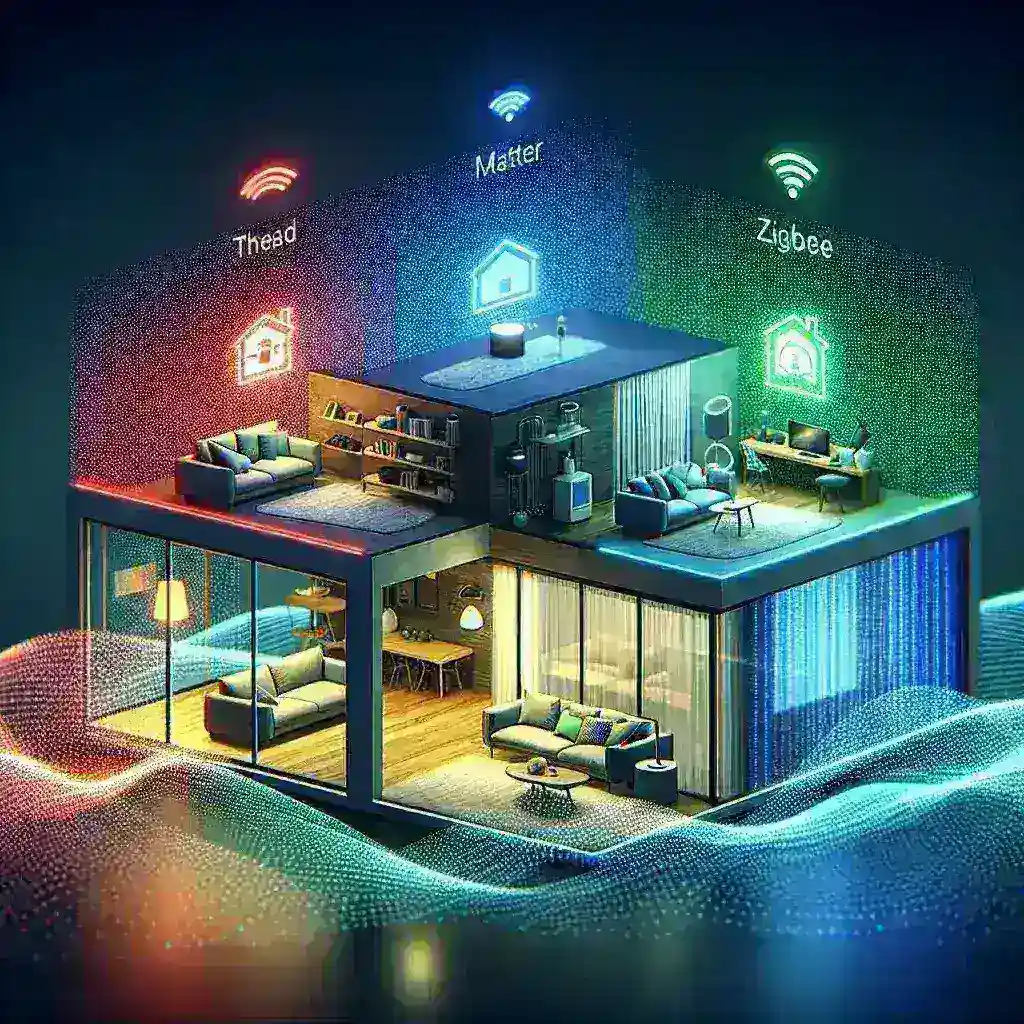
The rise of smart home technology has revolutionized the way we interact with our living spaces. With various smart home protocols available, it’s essential to understand the differences between them to optimize your smart home experience. This article delves into three prominent protocols: Thread, Matter, and Zigbee.
What are Smart Home Protocols?
Smart home protocols are communication standards that allow devices to connect and work together seamlessly. These protocols ensure that your smart devices can communicate with each other, regardless of the manufacturer. As the smart home landscape evolves, new protocols emerge to enhance user experience, security, and interoperability.
Overview of Thread, Matter, and Zigbee
Thread
Thread is a low-power, wireless mesh networking protocol designed specifically for IoT (Internet of Things) applications. It operates on the IEEE 802.15.4 standard, enabling devices to connect directly to each other without the need for a central hub. This decentralized structure allows for improved reliability and range.
Matter
Matter, formerly known as Project Connected Home over IP (Project CHIP), is an open-source, royalty-free connectivity standard aiming to facilitate communication between different smart home devices. Developed by the Connectivity Standards Alliance (CSA), Matter supports a range of technologies, including Ethernet, Wi-Fi, and Thread, allowing for a more cohesive smart home ecosystem.
Zigbee
Zigbee is another low-power, wireless mesh networking protocol, similar to Thread. It has been widely adopted in the smart home industry for years, allowing devices to communicate over short distances. Zigbee operates on the IEEE 802.15.4 standard, but it requires a hub for device communication, which can limit flexibility compared to Thread.
Key Differences
Architecture
- Thread: Mesh networking without a central hub.
- Matter: Works with various network technologies including Thread and Zigbee; aims for interoperability.
- Zigbee: Requires a hub for communication, limiting mesh capabilities.
Interoperability
One of the most significant advantages of Matter is its focus on interoperability. Matter aims to unify the smart home landscape, allowing devices from different manufacturers to work together seamlessly. In contrast, while Thread and Zigbee can communicate within their respective ecosystems, compatibility can be an issue across different brands.
Power Consumption
Both Thread and Zigbee are designed for low power consumption, making them ideal for battery-operated devices. However, Thread’s architecture allows for more efficient use of power, as devices can communicate directly with one another without needing to relay messages through a hub.
Pros and Cons
Thread
- Pros:
- Decentralized architecture for increased reliability.
- Low power consumption for extended device life.
- Supports a wide range of devices through Matter integration.
- Cons:
- Still relatively new, resulting in limited device availability.
Matter
- Pros:
- Seamless interoperability across different manufacturers.
- Supports multiple network technologies.
- Open-source, encouraging widespread adoption.
- Cons:
- Currently in the rollout phase, with a limited selection of Matter-certified devices.
Zigbee
- Pros:
- Established presence in the market with a vast array of compatible devices.
- Low power usage suitable for battery-operated devices.
- Cons:
- Requires a hub for device communication, limiting its flexibility.
- Interoperability issues between different manufacturers.
Future Predictions
As the smart home industry continues to evolve, the demand for interoperable and user-friendly protocols will increase. Matter, with its focus on collaboration among manufacturers, is likely to play a pivotal role in the future of smart home technology. Thread is expected to gain traction as more Matter-certified devices hit the market. Meanwhile, Zigbee may continue to coexist, especially in established smart home setups, but it may need to adapt to remain competitive.
Real-World Examples
Many popular smart home brands have begun adopting these protocols. For instance, companies like Apple, Google, and Amazon support Matter, aiming to create a more unified ecosystem. On the other hand, numerous smart lighting products and sensors still rely on Zigbee, showcasing its longstanding presence in the market.
Conclusion
Navigating the smart home protocol landscape can be challenging, but understanding the differences between Thread, Matter, and Zigbee is crucial for making informed decisions. As technology evolves, embracing protocols that prioritize interoperability, efficiency, and user experience will undoubtedly shape the future of smart homes. Whether you are building a new smart home or upgrading your existing setup, considering these protocols will lead to a more connected and efficient ecosystem.


Leave a Reply