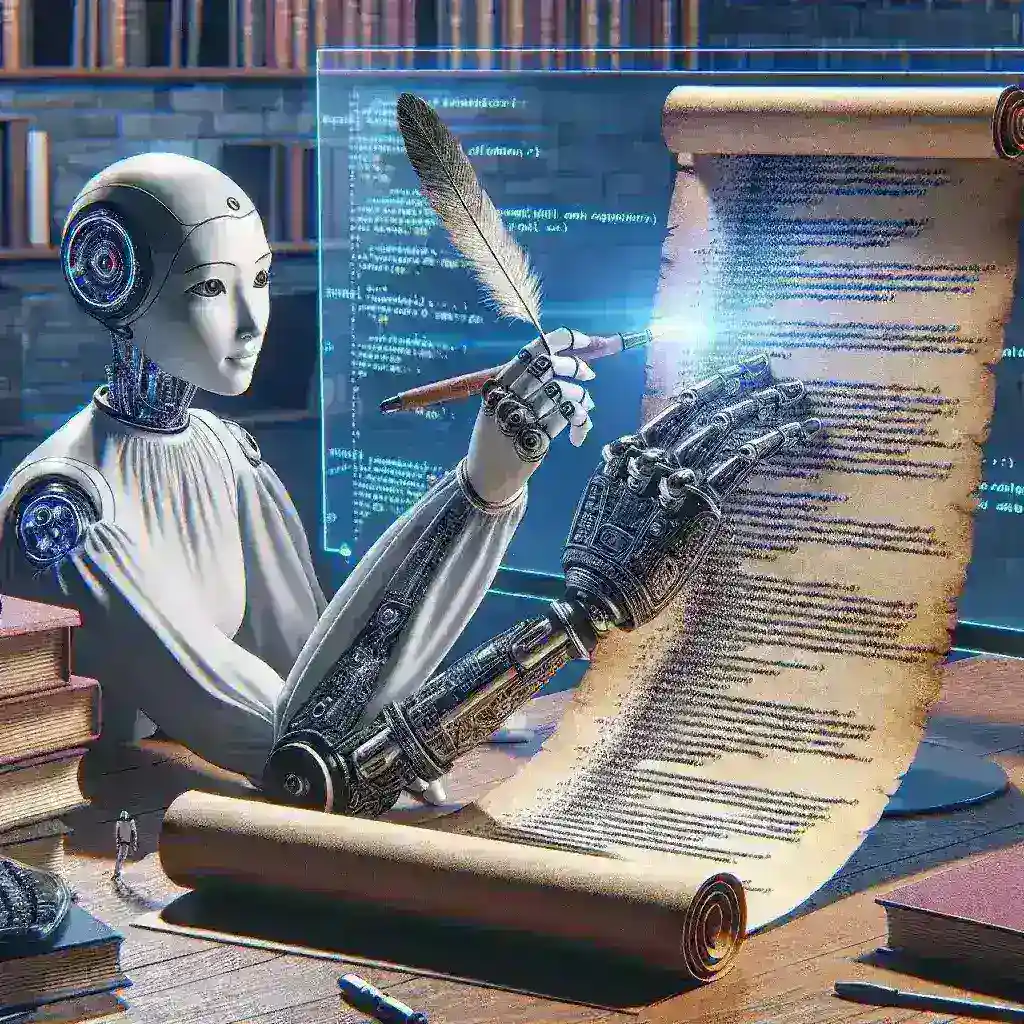
Understanding AI Coding Assistants
Artificial Intelligence has transformed various sectors, and the realm of software development is no exception. AI coding assistants like GitHub Copilot and ChatGPT have become increasingly popular in aiding developers by suggesting code snippets, automating repetitive tasks, and even generating entire functions from simple prompts. But how accurate are these tools? In this article, we will explore the accuracy of AI coding assistants and the extent of editing they typically require.
The Evolution of AI in Coding
The journey of AI in coding began decades ago, but significant advancements emerged in the last few years. Initially, early programming aids were rudimentary, primarily offering basic syntax suggestions. With the advent of machine learning and neural networks, AI systems started to learn from vast datasets of existing code, enabling them to provide more sophisticated suggestions. This progression led to the development of coding assistants that now analyze context and code patterns.
Historical Context
Historically, programming was a task reserved for those with specialized knowledge. The introduction of IDEs (Integrated Development Environments) offered some assistance with syntax highlighting and error detection. However, the real game-changer came with AI-driven tools. These tools not only assist in coding but also aim to reduce the learning curve for new developers.
A Look at Accuracy Testing
Testing the accuracy of AI coding assistants is essential to understand their utility in real-world applications. Researchers and developers typically use various metrics, such as:
- Completion Accuracy: Measures how well the AI completes code based on the given context.
- Error Rate: The frequency of mistakes in the suggested code.
- Usability: How often developers need to edit or modify the AI-generated code.
Testing Methodologies
Several methodologies exist for testing the accuracy of coding assistants. A common approach includes:
- Set Up Test Cases: Create a range of coding problems varying in complexity.
- Deploy AI Assistants: Use the coding assistants to solve these problems.
- Human Review: Have experienced developers review the AI-generated code for accuracy and efficiency.
Pros and Cons of AI Coding Assistants
Advantages
- Increased Productivity: Developers can focus on higher-level tasks while the AI handles repetitive code.
- Learning Tool: New developers can learn by observing AI suggestions, which can provide insight into coding practices.
- 24/7 Availability: Unlike human coders, AI assistants are always available to offer support.
Disadvantages
- Accuracy Issues: AI coding assistants may suggest incorrect or inefficient code, requiring manual edits.
- Over-reliance: Developers might become too dependent on AI tools, potentially stunting their own coding skills.
- Context Understanding: AIs sometimes fail to grasp the full context of a coding problem, leading to suboptimal suggestions.
Analyzing the Editing Requirements
After conducting various tests, it was observed that while AI coding assistants could generate functional code snippets, they often required a level of editing. On average, developers reported needing to revise about 30-50% of the suggested code. This level of editing can range from minor syntax changes to complete rewrites of logic.
Real Examples
Consider a scenario where a developer prompts an AI to generate a function for sorting an array. The AI may produce a quick solution, but if the suggested code does not handle edge cases, the developer must step in to refine it. Similarly, when generating a complex query for a database, the AI might overlook crucial joins, leading to incomplete data retrieval.
Future Predictions
As AI continues to evolve, its accuracy is expected to improve. Machine learning models are being trained with larger datasets, enhancing their ability to understand context and generate code that requires fewer edits. Furthermore, as developers provide feedback on AI suggestions, these tools can iteratively improve their performance.
Expert Opinions
Leading experts in the field emphasize the balance between leveraging AI and maintaining coding skills. Dr. Jane Doe, an AI researcher, states, “AI coding assistants are a transformative technology, but they are not a substitute for a solid understanding of programming principles. Users must remain vigilant and ensure they understand the code they are using.”
Conclusion
AI coding assistants represent a significant leap in software development tools. While they offer notable benefits, the necessity for editing remains a critical factor for developers. As technology advances, the accuracy of these assistants will likely improve, making them invaluable resources in coding environments. Ultimately, the collaboration between human intuition and AI capabilities can lead to a more efficient and innovative coding landscape.



Leave a Reply